
Ilchester Previous Residents by Era
Think of the search as dated comparisons stacked in order. Modern county records start with the parcel and its deed reference. Older land indexes then carry ownership back further. Sometimes that trail runs past the point where street addresses even existed. Regional directories, census schedules, maps, permits, probate files, and archival material each add a different piece of the picture. Start with the source nearest your target year. After that, a shared parcel, legal description, address form, or surname can link one record to the next.
| Source | Years it covers | Where held | What it can show |
|---|---|---|---|
| Howard electronic land index | COTT from 1965, CAIS from 1994, ELROI from 2004 by series | MDLandRec | Searchable parties, instruments, dates, and book-page references |
| Howard grantor and grantee indexes | 1840-1983, with paper or microfilm series through 2003 | Maryland State Archives Guide, historical indexes, and search room | Names with book-page citations for the deed trail |
| Land books and plats | Earliest surviving county records; plats include 1853-1931 and later series | MDLandRec, Plats.net, and Maryland State Archives | Legal descriptions, lots, blocks, subdivisions, and surveys |
| Regional telephone and city directories | Verified Maryland volumes from 1961-62 and 1970-71; wider city-directory inventory mainly 1861-1960 | Library of Congress, HCLS, and HCHS | Dated address and telephone-subscriber clues, with coverage gaps |
| Federal census | 1790-1950 released under the 72-year rule | NARA, Census access channels, and library databases | Household snapshot, age, relationship context, and dwelling clues |
| Howard permit data | Featured open-data set from January 1, 2010 forward | Howard Accela and Open Data | Work date, type, site address, description, and status |
| Historic aerials | 1943 through 2025 in named county layers | Howard County GIS | Structure, road, and parcel continuity rather than named residents |
A recent transfer calls for SDAT and MDLandRec. No digital land-index hit for that year? Try Historical Indices, an older book, the Archives, or the clerk's counter. For household questions, pair a directory with the closest released census schedule rather than assuming the owner was the only person at the address.
Ilchester Previous Residents Begin at SDAT
The Maryland SDAT Real Property Search opens the current parcel card. That card anchors the whole backward trail. Search Howard County by owner, premises address, or account. Copy the owner name exactly as indexed. Add the mailing address, premises address, district and account, map, grid, parcel, lot, legal description, transfer information, and deed reference. Those fields bridge the gap to land records and maps. A transfer panel can supply a date ladder, but it stops short of a complete title opinion.
Keep mailing and premises addresses separate. A nonlocal mailing address may belong to the owner of record. The premises is simply the tax location. Neither field proves who actually lived there. The SDAT card may show a principal-residence or homestead status. Those are tax-program clues rather than a household roster. Free SDAT terminals at local assessment offices offer another public access channel. Use them when the online record is unclear.
Note: Copy the legal description before searching old names, because a tract, lot, or plat stays stable even when a street label changes.
Ilchester Previous Residents in Land Index Layers
Howard's land-record access is layered by era. The electronic groups start with COTT in 1965. Then came CAIS in 1994 and ELROI in 2004. A name or date query is only a first pass. Before those cutoffs, turn to MDLandRec's Historical Indices. Those are browsable scanned index books. Then use Jump to New Volume with the book and page. Clerk's initials are optional on that route. Some records need in-person examination or a certified copy. For those, the county clerk's Land Records Department remains the counter and copy route. The Howard County Circuit Court grantee index documents a major archival layer. It helps you follow a buyer backward through the county's deed history.
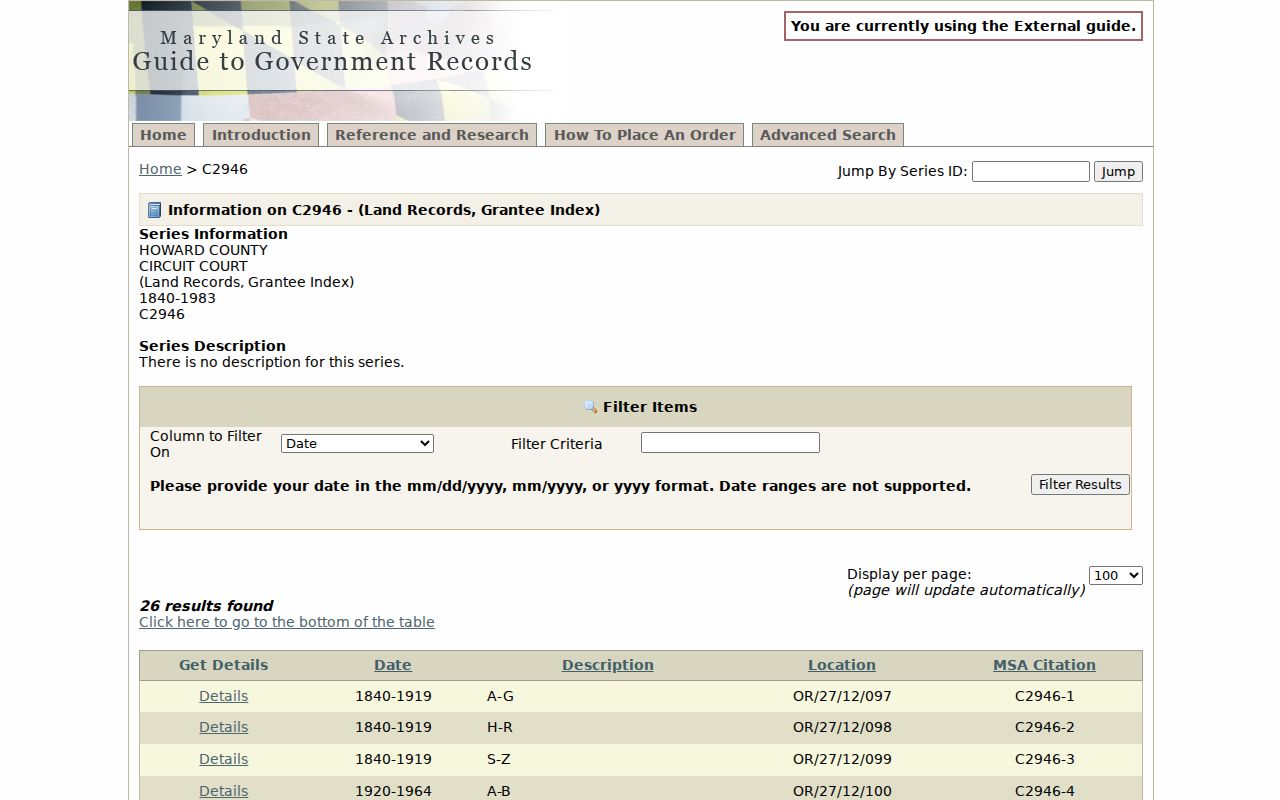
A grantee entry shows the earlier purchase. A later grantor entry can confirm the same interest moving on to its next owner.
Ilchester Deed Chain for Past Residents
A deed chain walks the recorded parties in reverse. Begin with the current SDAT card and the purchase deed it cites. In that deed, the grantor is normally the party transferring the property to the grantee. Search that grantor as a grantee in an earlier period to surface the prior purchase. Where names repeat in Ilchester records, confusion is common. The legal description, lot, plat, tract, and book-page references keep separate properties apart. Run the mirror search too. A grantee looked up as a grantor reveals the later transfer out.
- Copy the current parcel's owner name, legal description, and deed book-page reference from SDAT.
- Locate the instrument in MDLandRec and read the image, not only the index line.
- Record grantor, grantee, instrument type, recording date, consideration, book-page, and each prior-reference citation.
- Search the seller as a grantee in the earlier period, using the same tract, subdivision, or plat clues when several results share a name.
- When the electronic index ends, browse Historical Indices, use Jump to New Volume, or consult the Howard Land Records counter and Archives finding aids.
- Grantor and grantee
- The grantor transfers an interest in a recorded instrument; the grantee receives it.
- Chain of title
- The documented sequence of transfers for a property interest, checked through the instruments and citations.
- Legal description
- The parcel wording in a deed or plat, such as a lot, block, subdivision, tract, or survey description.
- Book and page
- The volume and page citation that leads from an index entry to the recorded land record.
Ilchester Past Residents in Directories and Census
Land records track ownership. But they rarely settle who actually lived at an address in a given year. For that household layer, use regional reverse or criss-cross telephone directories. Add released federal census schedules as well. The Library of Congress verifies Baltimore Suburban West material for November 1961 through 1962. Baltimore volumes cover 1970 and 1971. Search under Ellicott City, Elkridge, Baltimore Suburban West, Howard County, Ilchester, Ellicott Mills, and Patapsco. A regional volume may use a locality label different from the modern CDP.
Directory coverage has gaps, and a telephone subscriber is never the whole household. Census schedules are a snapshot, catching people absent from any phone listing. The Ilchester city directories collection record supplies the shelf context. Treat the volumes as address-and-year evidence rather than a stand-alone resident list.
- Choose a directory nearest the deed transfer or target year and preserve the entry's address, locality label, page, and publication date.
- Check the year before and after it for a move, changed name form, or shifted address.
- Pair the best directory year with the closest released federal census schedule.
- Compare age, family relationships, dwelling clues, and nearby addresses with the parcel and deed history before treating a same-name result as a match.
Note: Record the publisher and page or image reference, because a directory entry is evidence for one edition, not a permanent address claim.
Ilchester Past Residents on Maps and Aerials
Maps answer the when, not the who. The Library of Congress holds a five-sheet Ellicott City Sanborn set published in August 1904. Official sources also confirm 1894 and 1904 Ellicott City sheets. The Maryland State Archives' Sanborn index spans Maryland material from 1885 through 1963. Coverage clusters tightest around the historic Ellicott City core and its industrial and rail corridor. So a missing suburban Ilchester address proves nothing about whether a building stood there.
Howard GIS stretches the visual record further. Its aerial layers run from 1943 through 2025. Coverage includes 1952, 1963, 1970, 1971, 1975, 1977, 1980, 1982, 1984, 1985, 1988, 1993, 1998, 2002, 2004, 2006, 2007, 2011, 2013, 2014, 2016, 2017, 2020, 2022, 2023, and 2025. Line up the same parcel across several layers. That pins down when a road or structure first appears. A name-based question still needs paper. Turn to a deed, directory, census, permit, or probate file.
For recent construction, the Howard Accela permit search draws on its featured 2010-present data set for work dates. A permit proves work happened. It does not prove who owned or occupied the property then.
Ilchester Tract Names in Previous Resident Research
Old Howard land hides behind tract names. Many properties predate the street numbers now attached to them. The Maryland State Archives keeps a Howard tract and patent index covering 1670 through 1977. It holds 1,847 entries. Each one can yield a tract name, county, patent or survey date, acreage, and citation. Those details can tie an old deed or survey to a parcel. Its current address did not exist when the first instrument was recorded. Start with the Howard County tract and patent index for any older land-name search. It anchors the Ilchester residents directory trail.
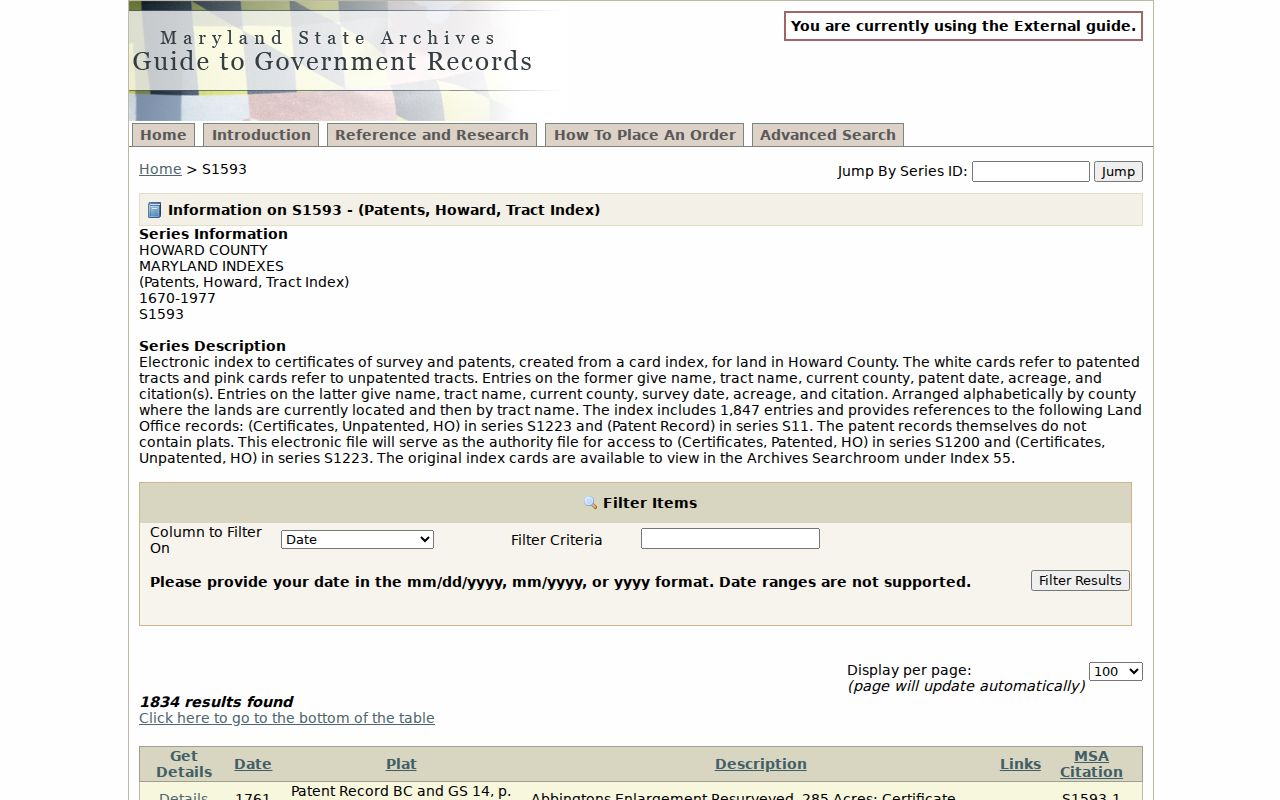
Set a tract result beside the deed's legal description, the plat, and the county GIS parcel fields. It is a continuity clue, not a modern street-address answer.
Ilchester House History Help and Lawful Use
For hands-on help, visit the HCLS Miller Branch & Historical Center or the Howard County Historical Society archives. Bring the modern address. Bring an SDAT account or deed reference, map-grid-parcel-lot fields, former owner names, target years, and alternate place labels. Ask staff to search local catalogs, vertical files, maps, photographs, newspapers, historic-site surveys, and address folders under Ilchester, Ellicott City, Ellicott Mills, Elkridge, Patapsco, a street name, a surname, or a tract name. The Historical Society reports more than 50,000 objects, photographs, archives, and library items. That depth pays off for past-residents work. The Maryland Archives house-history guidance suggests a fixed order. Get an index citation and book-page first. That inventory often yields an historic-house lead. Then check the Maryland Inventory of Historic Properties.
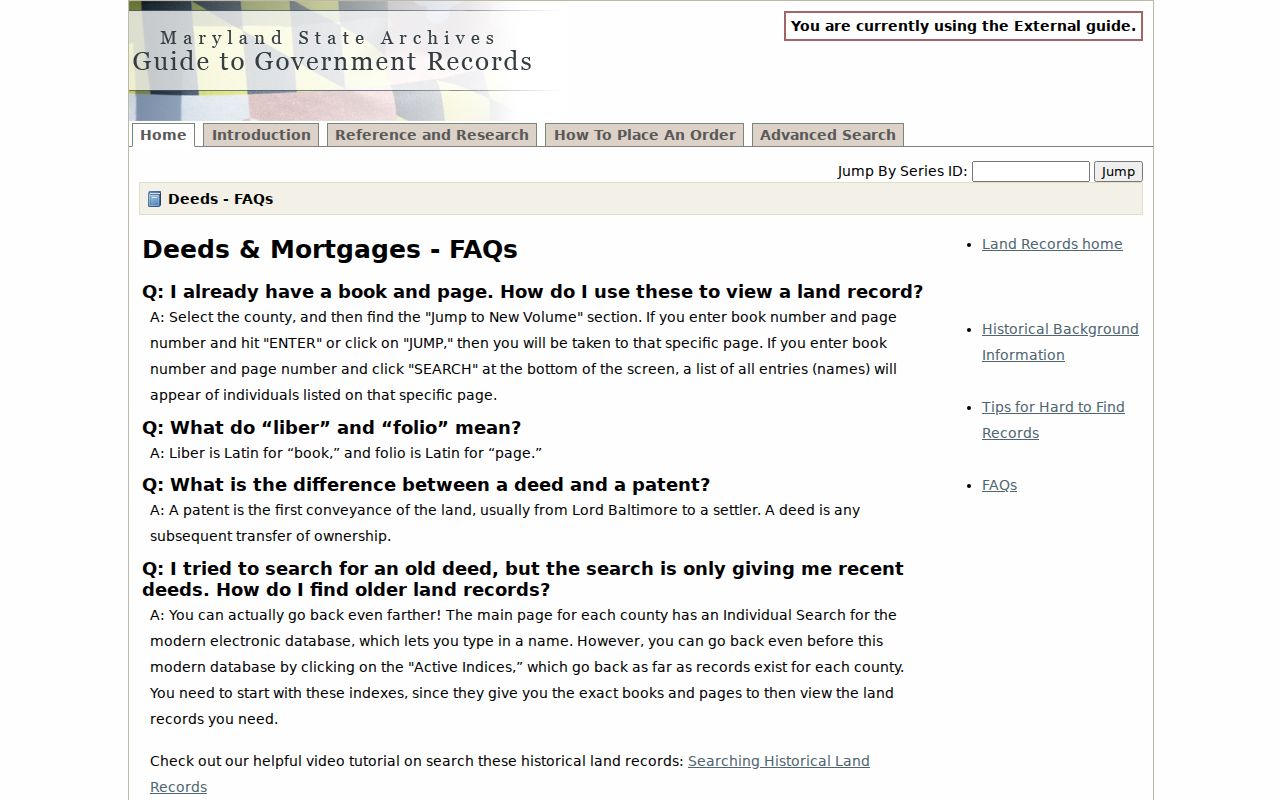
That index-first habit keeps each request tied to a specific record series. It also spares archivists an open-ended reconstruction project.